Opting for a hoisting apparatus, the choice often equals knuckle boom versus fixed jib. Straight boom present clarity and are ideal for perpendicular lifts, but articulated arms offer greater maneuverability, allowing access to challenging spaces. Contemplate the job site; if you’re mostly facing hindrances or require more sophisticated positioning, a articulated crane is ordinarily the better option. However, for unrestricted areas and straightforward lifts, a extendable jib might act as a larger thrifty resolution.
Understanding Stiff Boom Cranes: Applications and Benefits
Tough lifting arm devices represent a particular type of heaving equipment, created for weighty load handling in laborious locales. Their principal peculiarity is a unyielding boom architecture, which allows for specific positioning and improved security, especially when functioning in small spaces or at important heights. Common engagements cover bridge construction, mechanical projects, power station establishment, and foundational growth. The paramount bonuses comprise increased welfare, greater proficiency, and the ability to execute tasks that may be unrealizable with typical cranes. This leads to reduced outlays and refined plan consequences.
STS Hoists: The Leaders of Quay Container Transportation
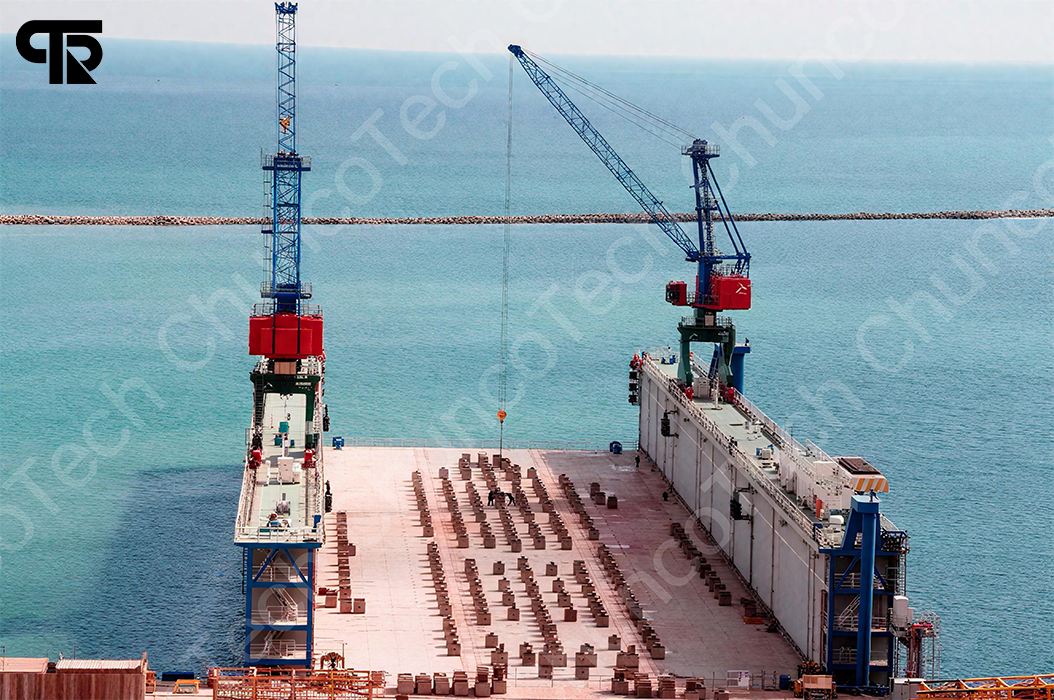
Latest massive STS hoists represent the peak of engineering performance in the seafaring industry. Designed to swiftly load and handle containers between freighters and the quay, they are vital for the fluid operation of modern terminals. Their elevation – often exceeding a hundredfold meters – and astounding lifting power allow them to handle the maximum-sized container freighters currently in activity, fundamentally molding global transactions.
Knuckle Boom Cranes: Multitasking in Handling Jobs
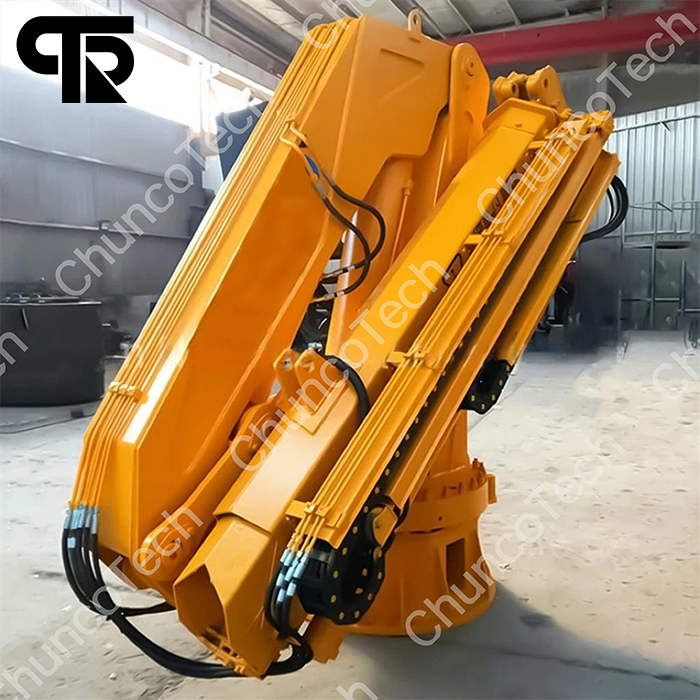
Articulated cranes are distinguished for their exceptional pliability, providing handlers with a special advantage in varied transporting jobs. Possessing a folding boom segment, these forceful lifters can cover around impediments and deploy cargo in tight environs. This quality makes them ideal for employments in fabrication, dispatching, energy endeavors, and several other areas. Ultimately, knuckle boom cranes offer a noteworthy solution to complicated loading needs.
Straight Boom Cranes: Sharpness and Stability Interpreted
Direct lifting arm loaders are distinguished for their exceptional power to deliver spot-on lifting and arrangement of objects. Compared with bendable models, their plain design creates fundamental balance, making them suited for tasks requiring elevated magnitudes of oversight and limited sway. This hallmark is specifically vital in manufacturing sites and branches where severe tolerances are essential.
Hard System System Advantages: At times Resilience Becomes Vital
Traditional jib arm machines often face challenges with elasticity, especially when carrying heavy materials or operating at important radii. Nonetheless, robust jib installations provide a substantial edge by lowering undesirable jolting. This heightened stability amounts to safer tasks, higher definiteness, and a minimized hazard of material unbalance. Accordingly, robust lifting are perfect for works where constructional stability is important.
Pier Cranes: Particular Detailed Analysis into STS Engineering
One harborside hoist mechanism represents an vital component within modern shipping ports. These quay loading devices are complicated constructions engineered to efficiently relocate packages out of large shipborne freighters near dock systems. Their respective performance requires meticulousness fabrication and advanced robotics to preserve security and raise performance.
Evaluating Lifting Types: Pivoting, Straight, Heavy-Duty, and Ship-to-Shore
Deciding on the ideal lifter for a specific use is critical. While many choices exist, four standard kinds – jointed cranes, fixed cranes, stiff cranes, and harbor cranes – symbolize significantly different abilities. Segmented cranes furnish enhanced maneuverability due to their articulated division, making them advantageous for confined locations. Linear cranes yield pliable reach through their retractable section, ideal for extensive elevating obligations. Strong cranes conserve a orthogonal division, preferred for accurate positioning where stability is paramount. Finally, Pier cranes, specialized for parcel hauling at piers, boast large lifting potency and far-reaching length.
- Folding Crane Styles
- Extendable Lifter Varieties
- Tough Loader Kinds
- Ship-to-Shore Apparatus Classes
Distinct Change Pertaining to STS Cranes: Innovations and Improvements
Through recent eras, STS (Ship-to-Shore) crane systems has undergone a substantial shift, stimulated by needs for heightened port performance. Early STS cranes were partially simple devices, integrating basic elevating mechanisms. Now, contemporary STS cranes include sophisticated machinery, including leading control systems, interactive positioning abilities, and better safety regulations. A key development is the use of electrified propulsion, curbing contamination and enhancing operational durability. Also, the rise in autonomous operation and smart maintenance are changing the field associated with STS crane control. The possibility sees uninterrupted focus on energy efficiency and the development of even larger cranes to accommodate significantly bigger container carriers.
 RTG Crane (Rubber-Tyred Gantry Crane)